
Если вам удобнее русский язык, читайте этот очерк здесь.
Almost every Greek island has its own ancient history, special coloring, and antique attractions, but Rhodes stands out from them. Well, what do you know about this tiny island?
Probably, the Colossus of Rhodes, one of the Seven Wonders of the Ancient World. As legend says, it was a giant 36-meter-high bronze statue of Helios, the Greek titan-god of the sun. It guarded the entrance to the port and served as a lighthouse for ancient seamen.
In medieval times, some believed that ships entered the harbour between the legs of the giant, but when we explored Mandraki Harbour, we had serious doubts about the reliability of these claims.

The harbor where the Colossus of Rhodes stood.
Don’t bother going to the island of Rhodes looking for smithereens of the former World Wonder lying somewhere under the sea. The real appeal of the island is in its unique history.
No one will be surprised by traces of Greek and Byzantine culture, but the most interesting fact is that from 1306 to 1523, Rhodes was under the reign of Hospitallers (later the Sovereign Military Hospitaller Order of Saint John of Jerusalem, of Rhodes, and of Malta).
Many beautiful constructions in Rhodes are connected with them: massive fortifications, the Palace of the Grand Master, the well-preserved Street of Knights, their former Hospital (now a museum), and the ruins of numerous small forts scattered along the coast.

The Palace of the Grand Master, Rhodes, Greece.
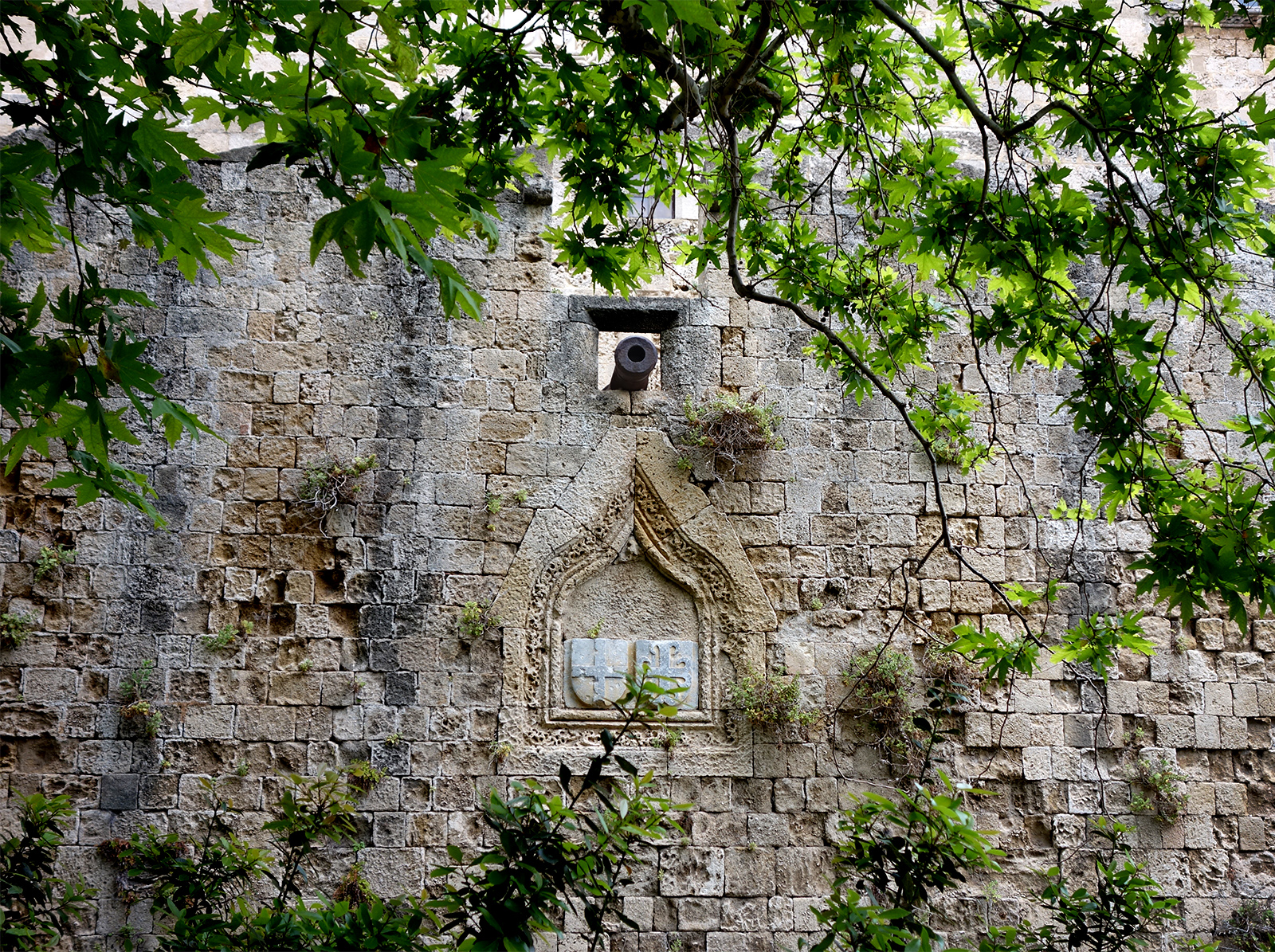
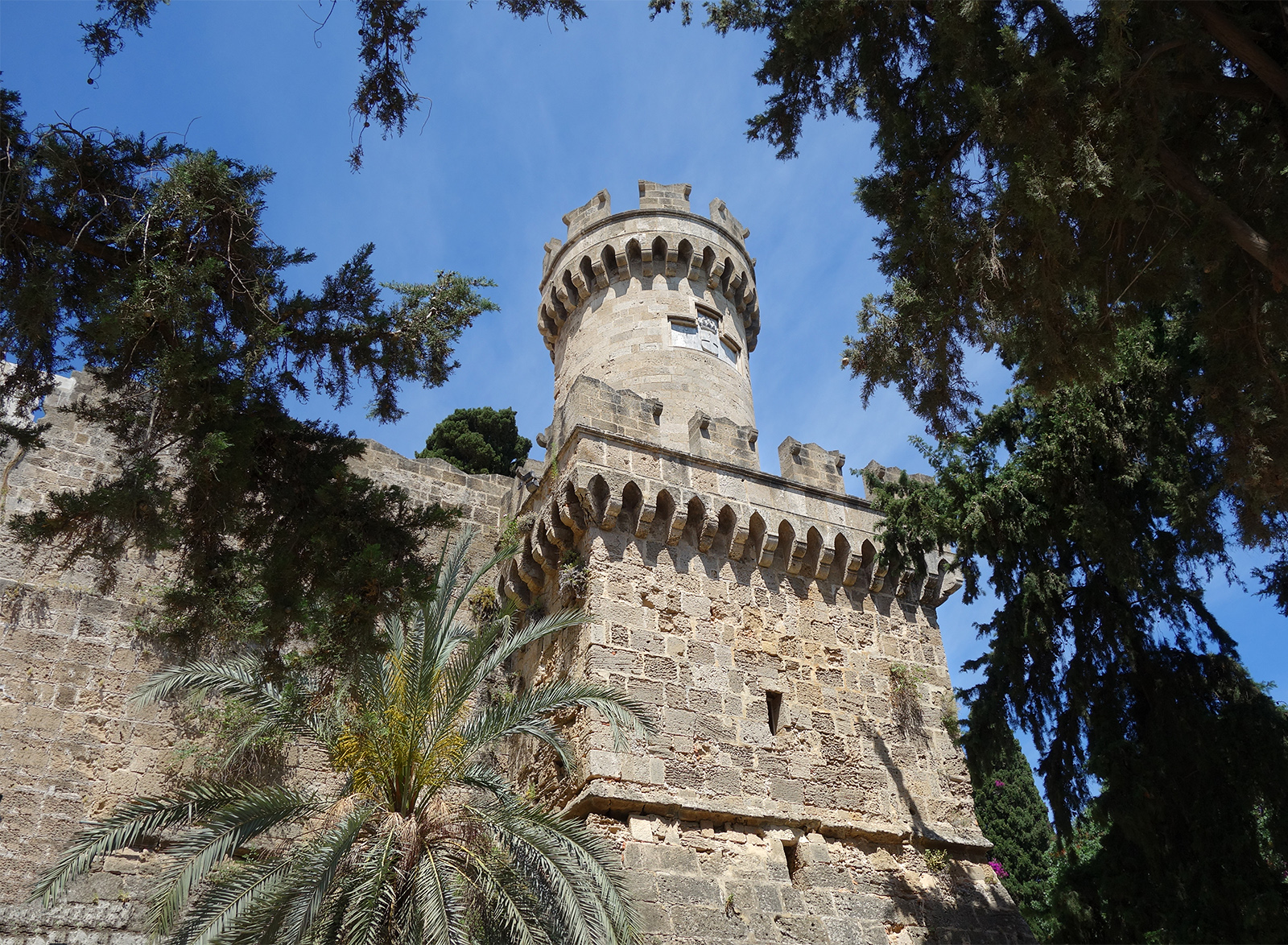
From a distance, the Palace of the Grand Master and the fortifications around it disappointed rather than impressed us. Fortunately, first impressions turned out to be false. We felt the enormity of the medieval builders’ plans only after descending into the moat between the walls on the sixth day of our stay on the island. It has shown itself to be a miracle of medieval military architecture.
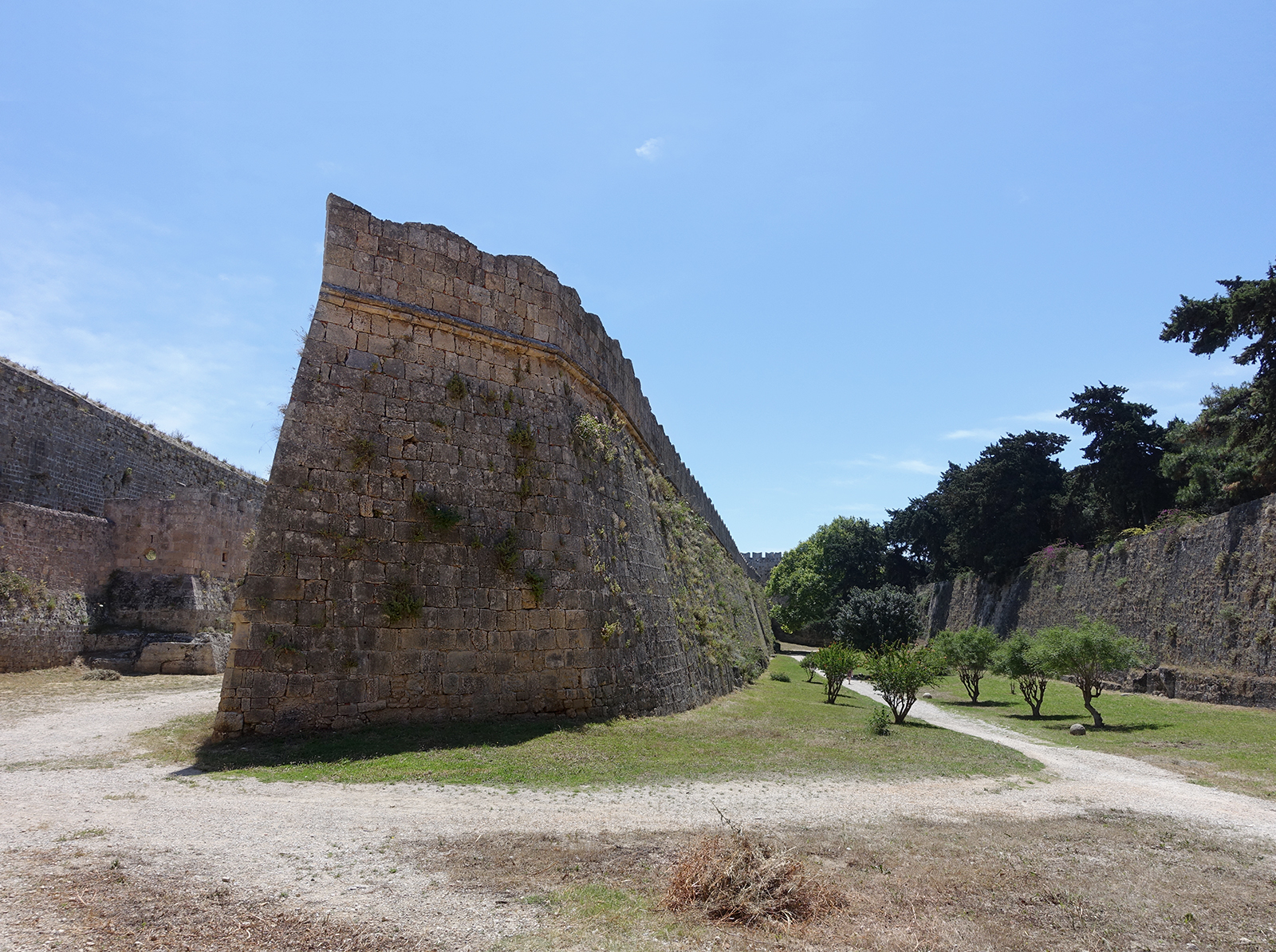
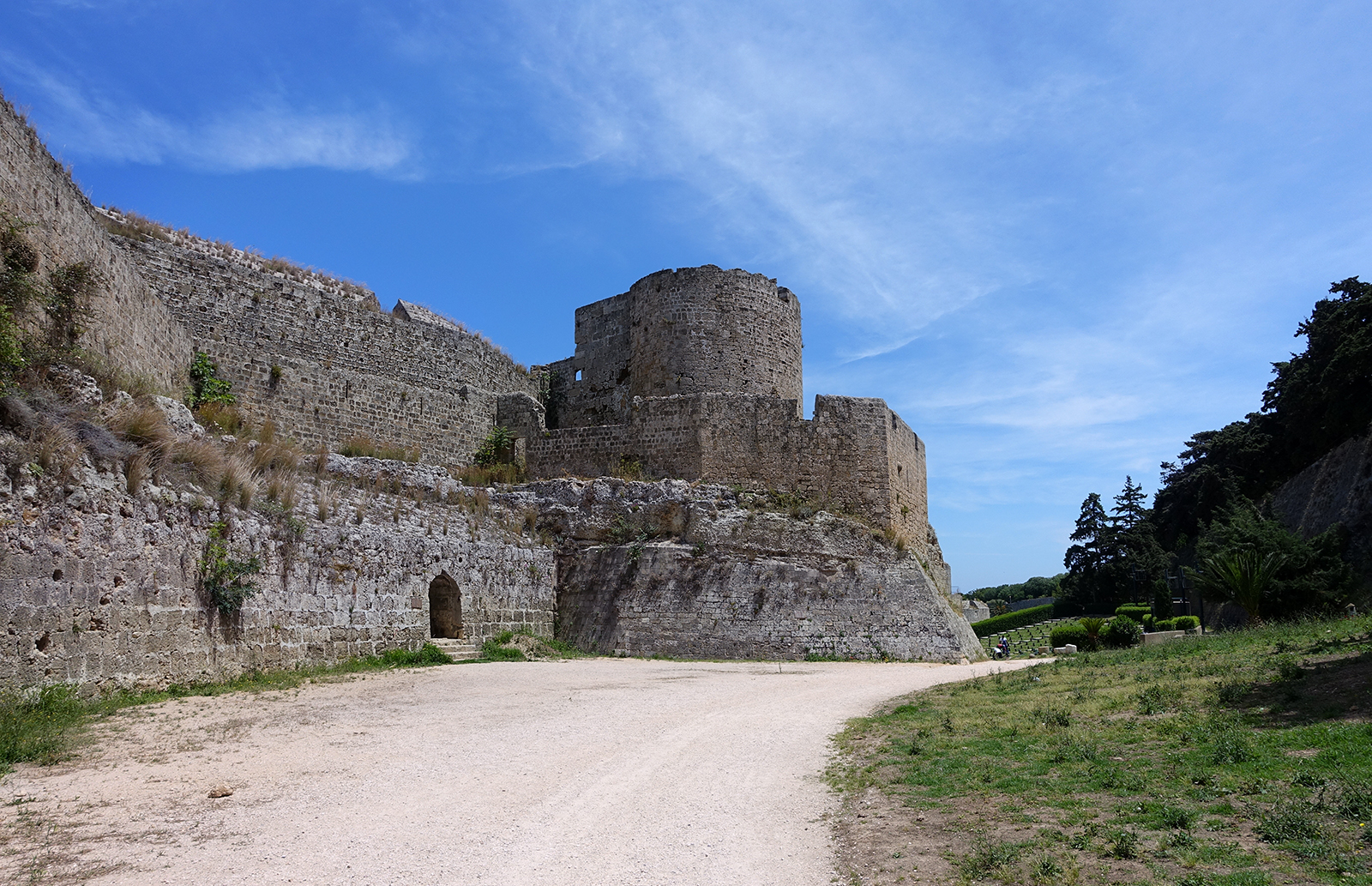
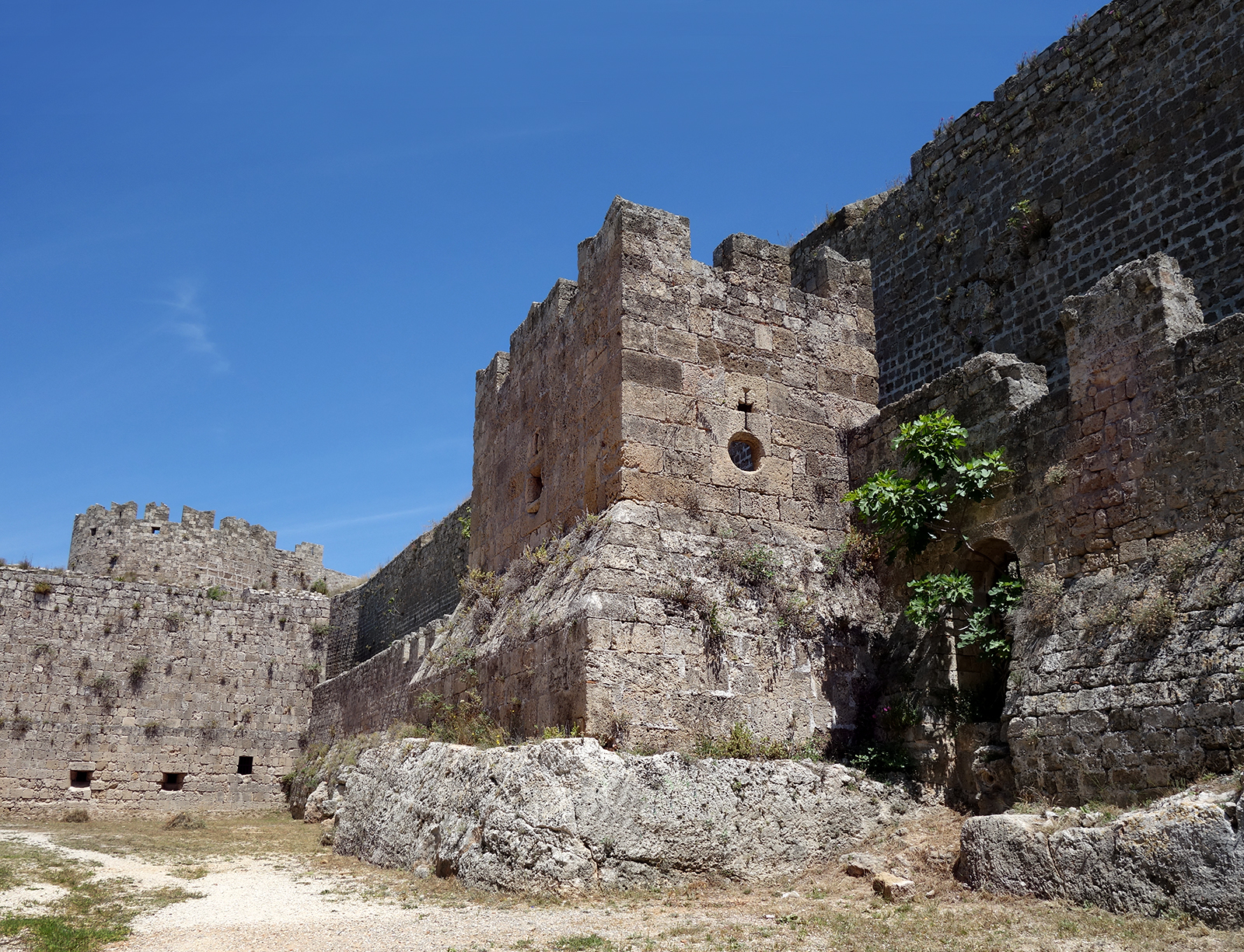
If your cruise liner will stay in Rhodes for a couple of days, don’t spend your time on useless excursions to Butterfly Valley or Seven Springs. You will get the strongest impressions from a walk along the moat between the old city walls.
You can be sure, an assault of these fortifications was a very hard task. If you take one wall, you see another, and then a dead end with hungry dogs or maybe tigers. Even now, the remnants of secret passages are visible everywhere. I can only imagine how romantic excursions with torches in these catacombs could be if the administration of Rhodes would find money to clear away the garbage littering this underground network.

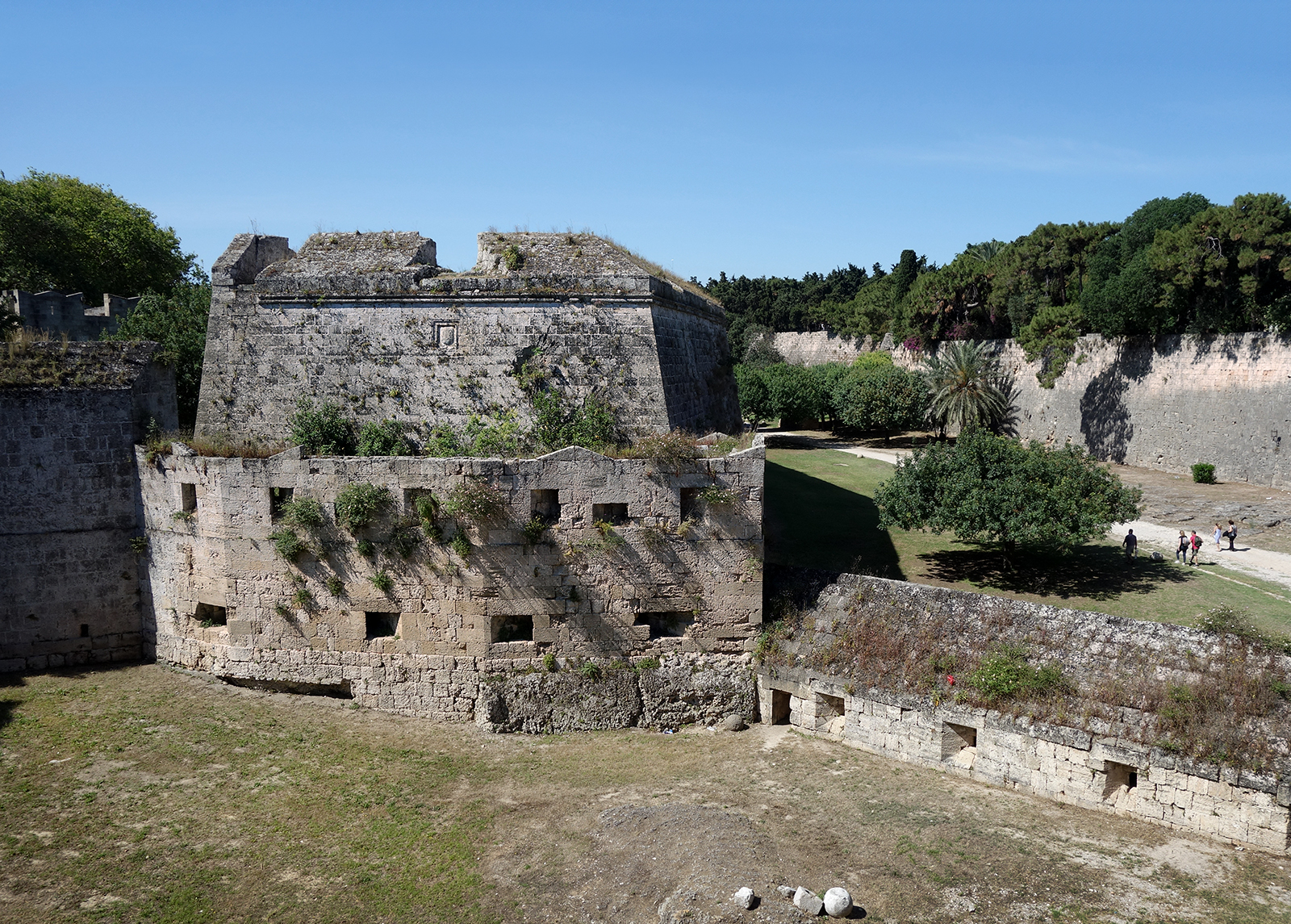
In the old city of Rhodes, you will find a mix of ancient Greek ruins, Byzantine and medieval architecture, the Jewish quarter, and bazars. This is a UNESCO World Heritage Site, and the oldest continuously inhabited medieval town of Europe.
But don’t stop now. The Palace of the Grand Master must also be visited. Yes, it is a reconstruction, but it shows how serious knights built their new residence in Rhodes after leaving Palestine. This palace is much more impressive than their next one, in Malta.
Visit the archaeological museum of the city, former hospital of knights. It will be more interesting than just strolling along the 200-meter Knights Street which ends by the museum.
On the other side of the island…

Happy travels!
