Если вам удобнее русский язык, читайте этот очерк здесь.
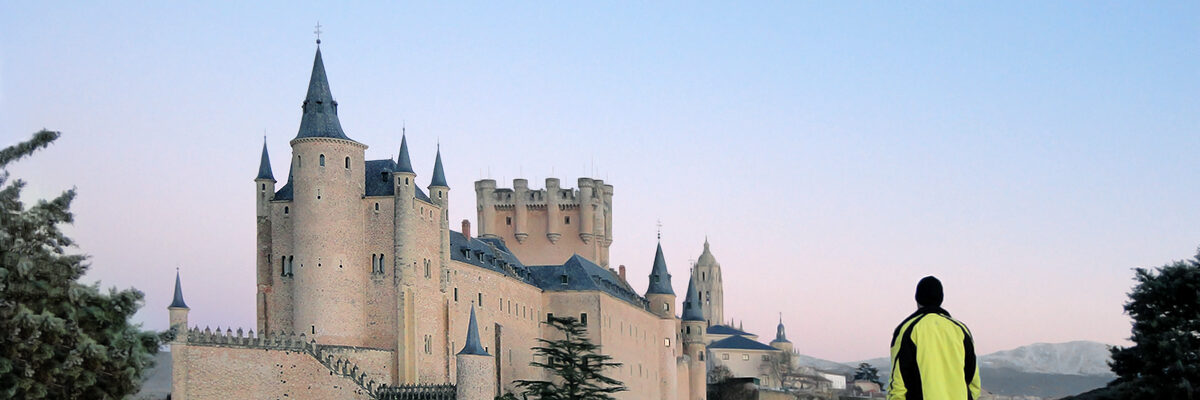
Alcazar of Segovia (alcazar means fortress or castle in Arabic) is a very talented and skillful photo model. It does not need your directions what pose to take, where to place the hands, how to hold its head, and in what direction to look. You raise your camera, and it immediately presents one of its numerous and always beautiful angles.
This castle is able to deal with light, virtually attracting it to its side. Whether it is sunrise or sunset, cloudy or clear blue sky, Alcazar of Segovia always appears before you in the best light.
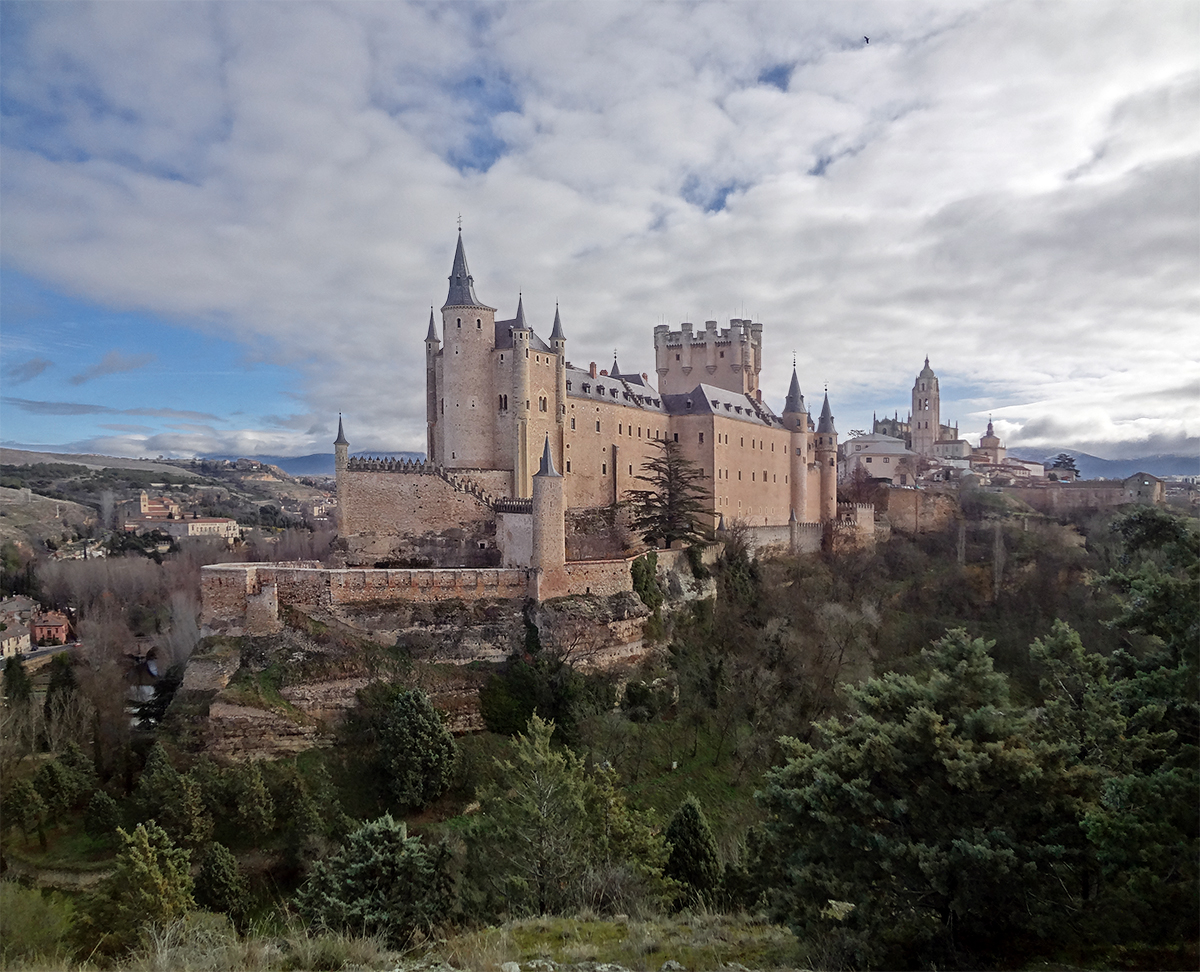
Alcazar of Segovia, Spain.
It has only one worthy contender in the art of posing for a photographer: Neuschwanstein Castle in Bavaria. The same story: whatever angle you would choose, Neuschwanstein always will be beautiful, mysterious, and dreamlike regardless of the weather or season. However, unless you have wings, Neuschwanstein Castle can be photographed from only two or three points, but Alcazar of Segovia can be viewed from all sides and even from two levels.
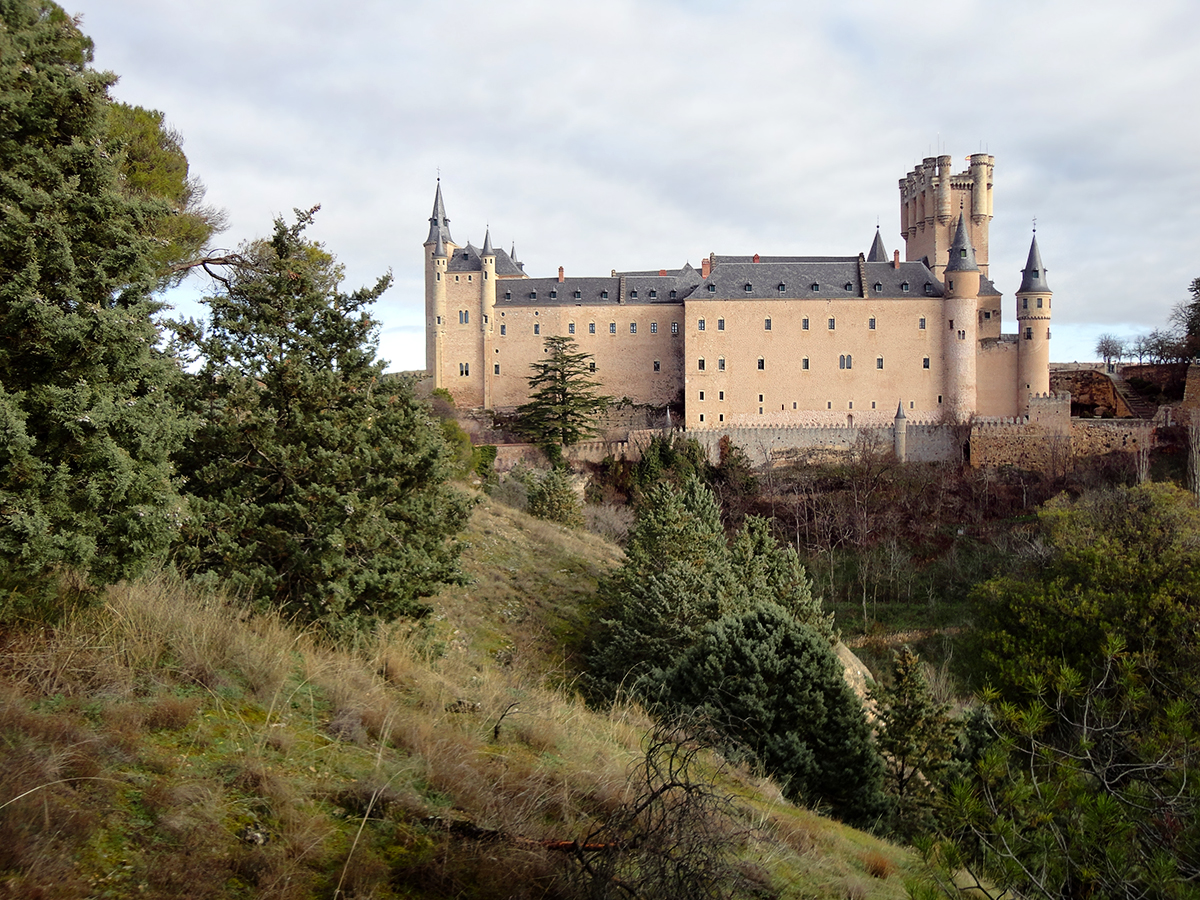
You go on the road along the base of the cliff which took all the brunt of stone laces of the Segovia castle, and take photographs at every step, but Alcazar always has the next photogenic pose for you. You climb the hill located opposite the castle and with each step you rise to a new level, not only in the literal sense, but also in the photographic one.
With this, the majesty of the castle does not suffer. No. Alcazar somehow condescends to you. It bows its head slightly, becoming less arrogant and more friendly, but not for a second does it forget that you are looking at it and taking photographs. It is on a photo session. It is at work. A true professional.
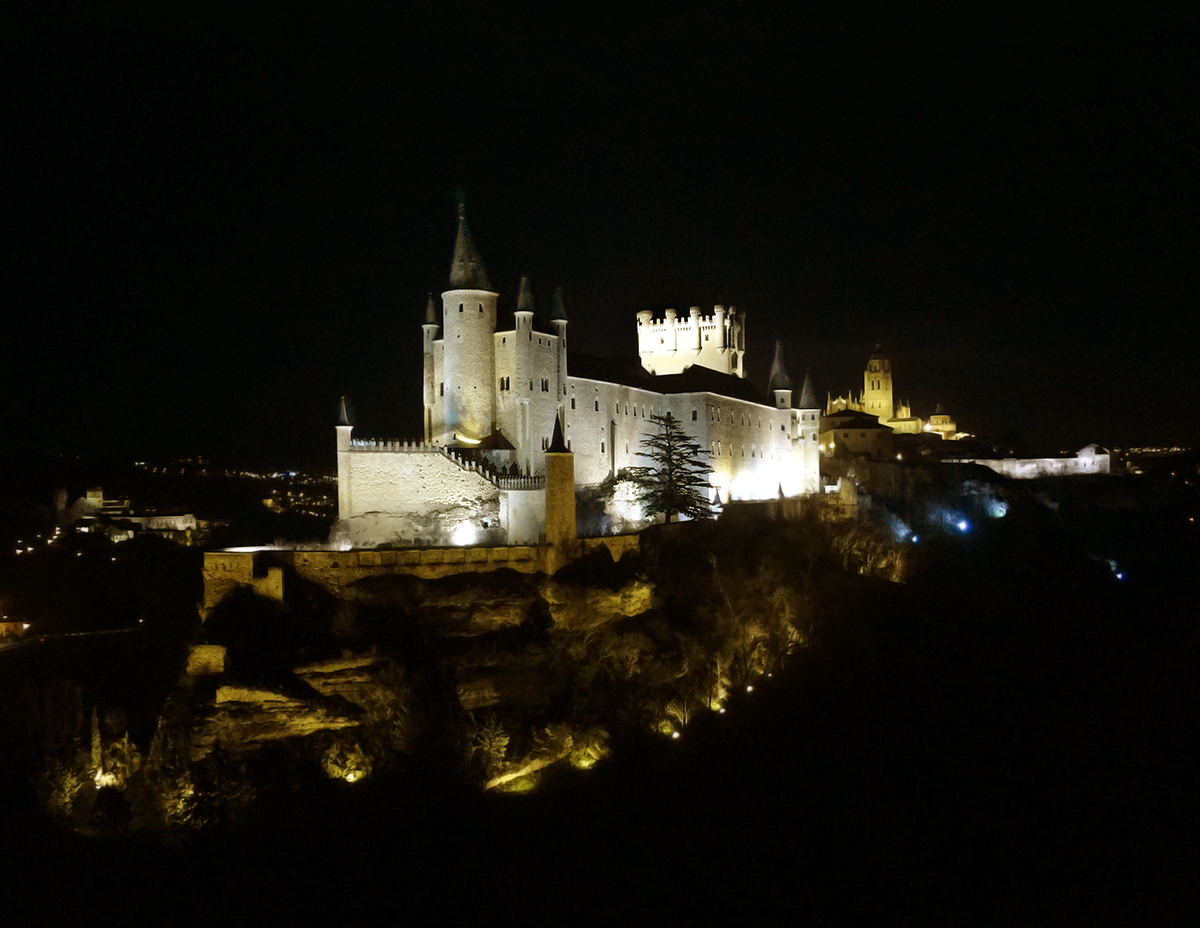
The castle remembers it even at dusk and at night. It knows for sure that some photographer is necessarily on duty somewhere among pine trees on the opposite hill in the hope of catching the celebrity by surprise and giving the world a very unusual and maybe even scandalous picture. In vain. Alcazar of Segovia is always ready to do its job: to look well and to amaze our imagination.
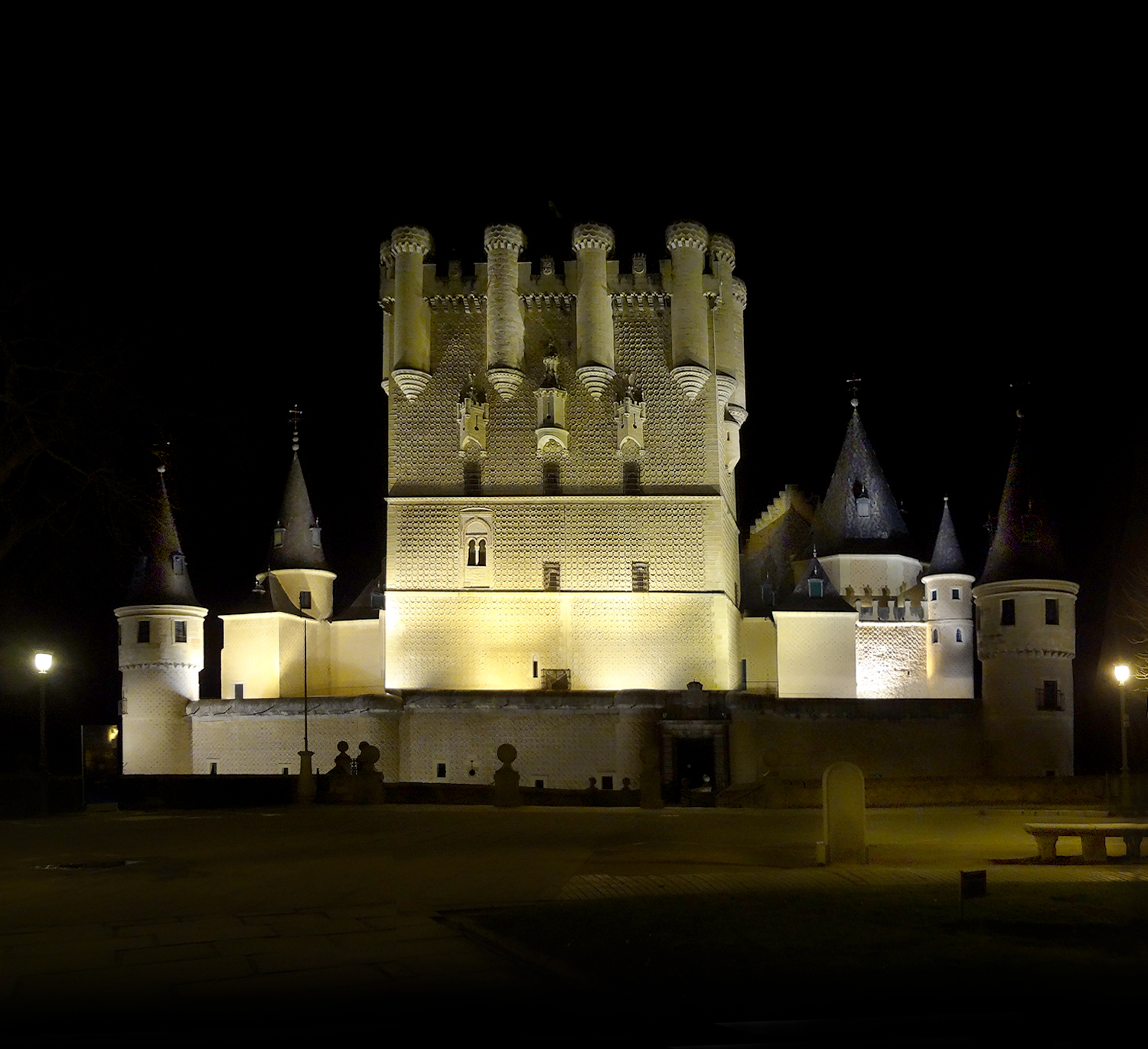
As a result, after a couple of photo sessions, you have 1,000 pictures, and after checking them out, you realize that 955 of them are breathtaking, 42 are very good, and three can be erased without regrets. Then the most difficult moment comes: you should select several photographs for this blog post. It’s like deciding which one of your beloved children will appear in their favorite TV show, and who will remain behind the scenes.
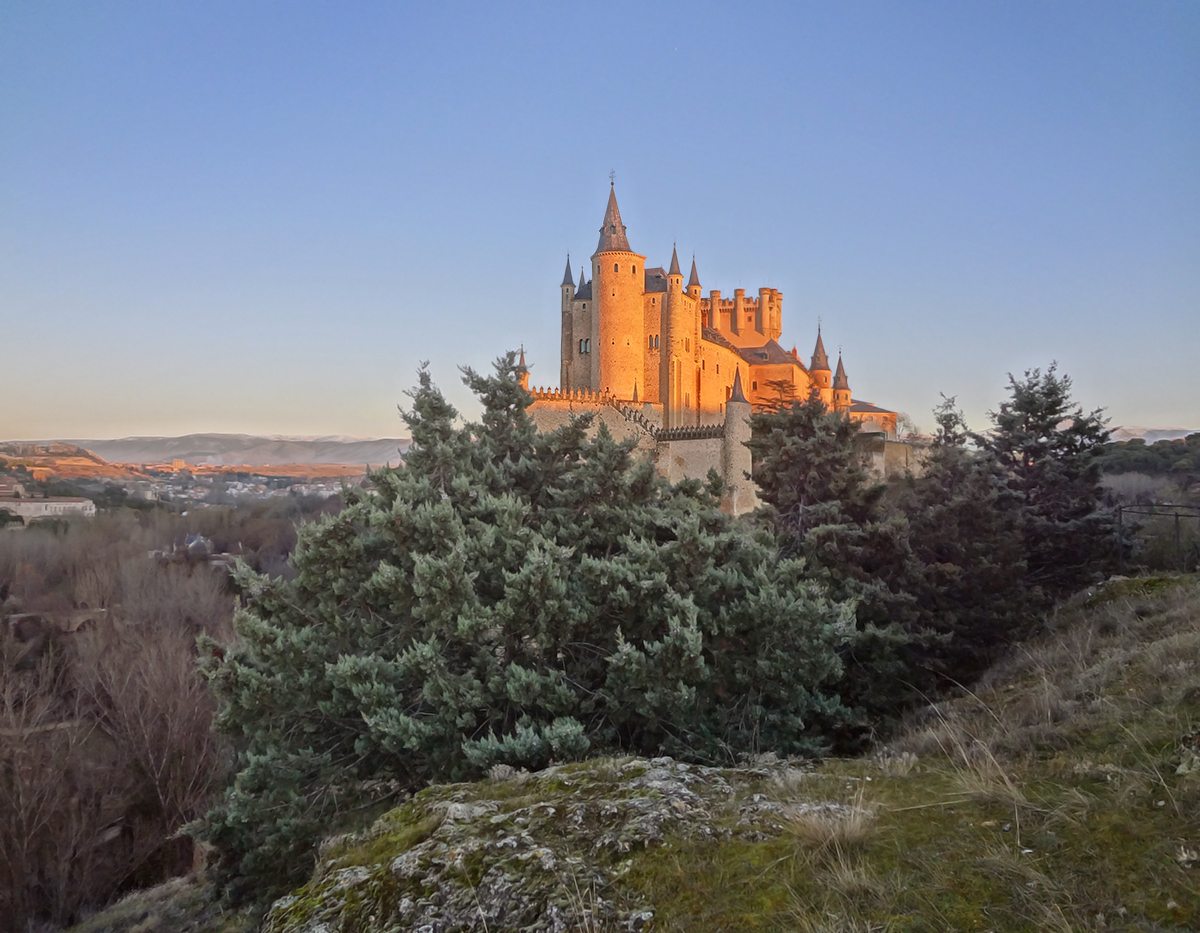
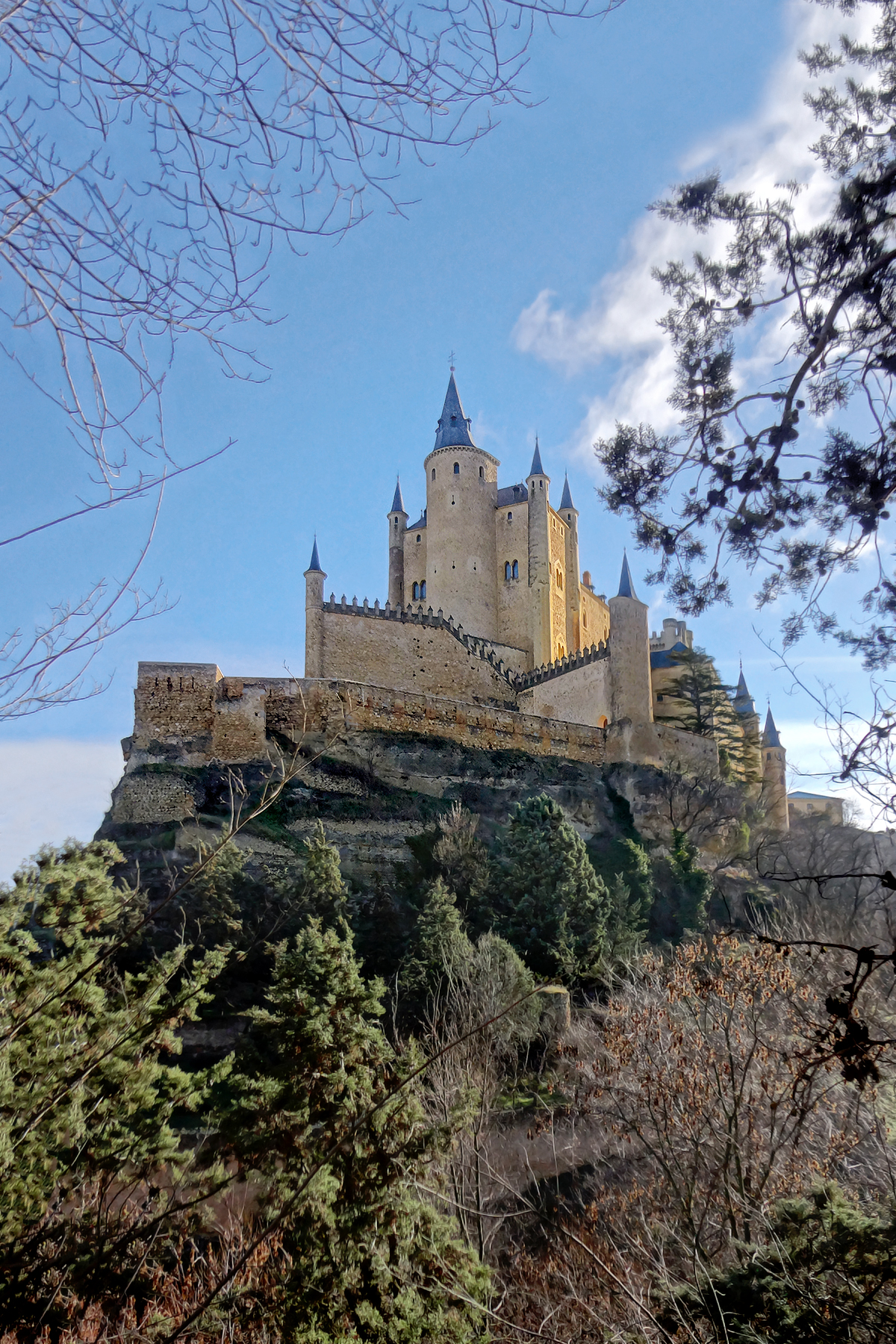
Unlike the castles in Seville, Toledo, or Granada which were built by Arabs for protection against Christian kings, Alcazar of Segovia was erected by Christians during the Reconquista, the expulsion of Moors from the Iberian Peninsula. We don’t have the overall plan of the secret underground passages leading from the castle to the river and other buildings of the old city. Scientists and enthusiasts are still looking for them.
Yes, the Statue of Liberty represents America’s beginning, but did you know that even before that, America got its start from Alcazar of Segovia? Here, in this castle, Queen Isabella I of Castile agreed to finance an expedition of Christopher Columbus to India. As you know, he discovered America.
The castle has not always looked like it does today. In its childhood (12th century), our photo model was very small and wooden until Alfonso VIII, the King of Castile and Toledo, with his wife Eleanor of England (a full sister of Richard the Lionheart, King of England) made it their official residence and started to build a stone castle. One of its most stylish parts—the slender tower tops—appeared only after 1750 when King Philip II decided that Alcazar of Segovia must “reflect the castles of central Europe.”


The castle was rebuilt many times. The last big reconstruction took place at the end of the 16th century. Today we see the result of a restoration carried out after a fire of 1862. The reason for the almost complete destruction of Alcazar was not enemy or natural disaster, but students. In 1764, King Charles II gave the castle to the Royal Artillery School which soon became an academy. Apparently, young artillery men were not very cautious with gunpowder, and the future world-famous photo model nearly lost its unique appearance.

Если вам удобнее получать анонсы наших очерков через МАКС, подпишитесь на наш канал!
In 1898, the General Military Archives of Spain were moved to Alcazar and placed on the upper floor where they remain to the present day. However, the main mission of the castle today is educational. This is a museum with an impressive collection of ancient weapons and armor, but we have not visited it. Why? After all, we had a plenty of time for it. Because we wanted to have a reason to return to Segovia.
The best time for a photo session with Alcazar of Segovia, Spain: any time of any season.
Happy travels!
