Немцы утверждают, что их Трир на 1300 лет старше Рима — скорее всего хвастают, мы не проверяли, но всякое возможно.
Как поселение город вполне мог появиться задолго до Рима, но своей теперешней исторической ценностью он обязан именно римлянам.
Римляне называли его Augusta Treverorum, потому как заложен он был на берегу реки Мозель во времена правления Октавиана Августа в 16 году до нашей эры.
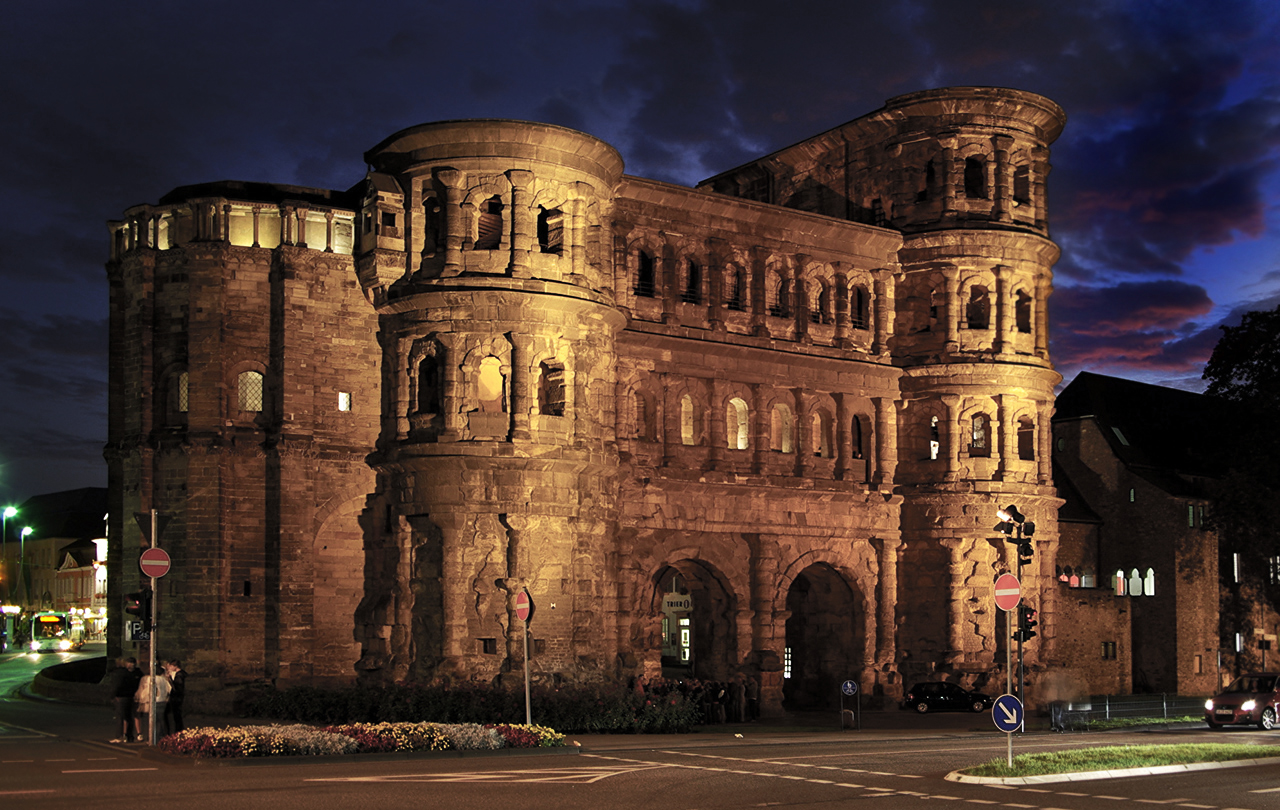
Порта Нигра – северные городские ворота, приблизительно 180 год н.э. — визитная карточка города.
Археологические изыскания 2018 дали ещё более точную дату основания — 170 год. В Империи в те времена всё было спокойно, поэтому строительство грандиозной стены вокруг города с четырьмя воротами, расположенными по сторонам света, вели не для защиты, а из соображений престижа. Порта Нигра — северные ворота и единственные уцелевшие.
Шесть римских императоров один за другим правили в Трире, и вполне ожидаемый результат: такого количества произведений древнеримской архитектуры, как в Трире, нет больше ни в одном городе севернее Альп.
Трирский кафедральный собор Св. Петра, самый старый в Германии, заложен по велению первого христианского императора Константина.
При императоре Диоклетиане, который провел административную реформу империи, разделив ее на четыре части, Трир стал одной из четырех столиц. Можно о таком городе рассказать коротенько?
Всё главное в этом городе — центр древнего Трира прямо через дорогу, и выглядит как и сто лет назад.
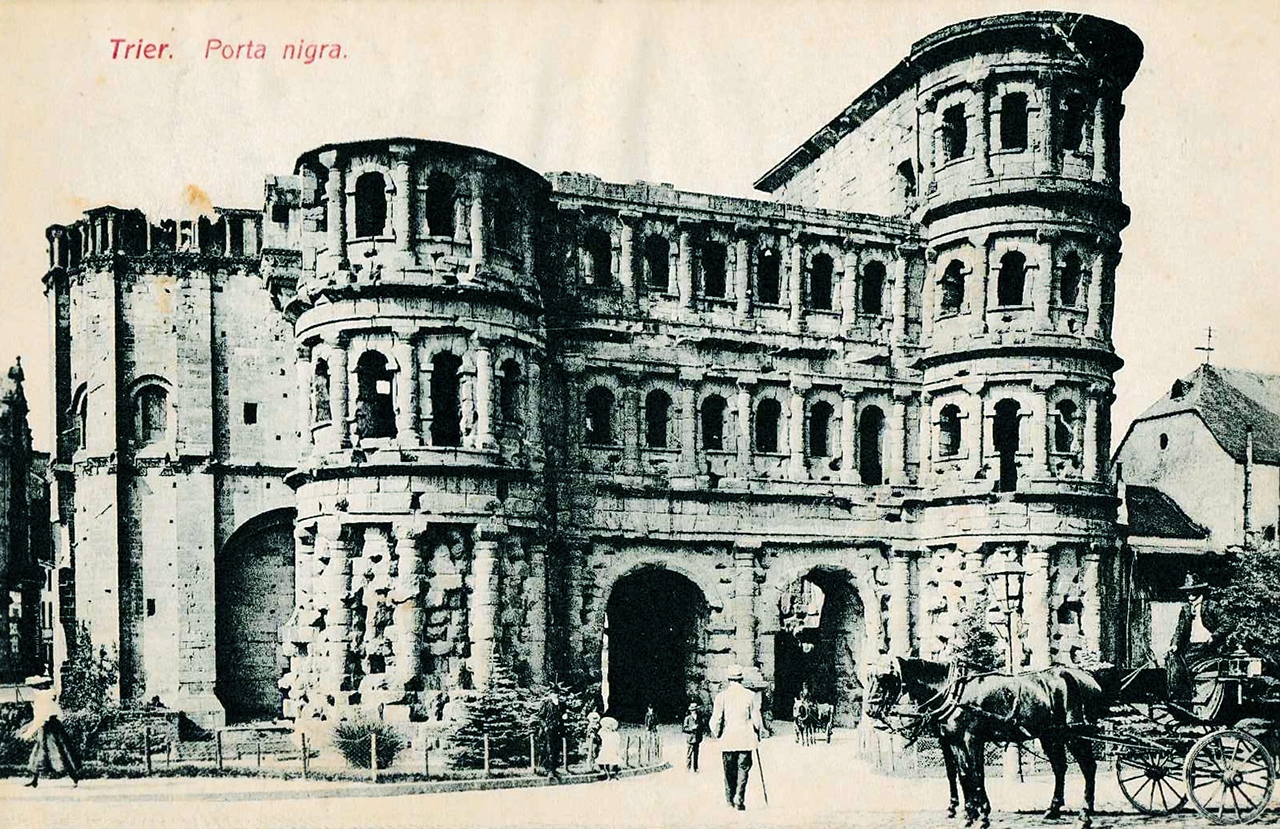
Порта Нигра не только хороши, они фотогеничны и днем, и ночью, а ещё это без преувеличения махина. Камни же почернели от времени, поэтому и прижилось название — черные ворота.
Сооружение монументальное высотой около 30 метров и толщиной почти 22 метра и ведь это всего лишь уцелевшая часть крепостной стены, которой был обнесен Трир в середине II века. Маленькая, крошечная часть, но мы могли утерять и её, если бы не… Наполеон.
Этим своим деянием император точно мог бы гордиться. Дело в том, что в 1030 году в восточной башне ворот был по собственной просьбе замурован византийский монах Симеон Трирский, через несколько лет после смерти канонизированный Папой Римским.
Вскоре Порта Нигра перестроили в церковь, названную его именем. Семь веков простояли римские ворота в забвении под сенью церкви, пока в 1804 году французский император Наполеон не повелел убрать все церковные надстройки и вернуть Порта Нигра первоначальный исторический вид.
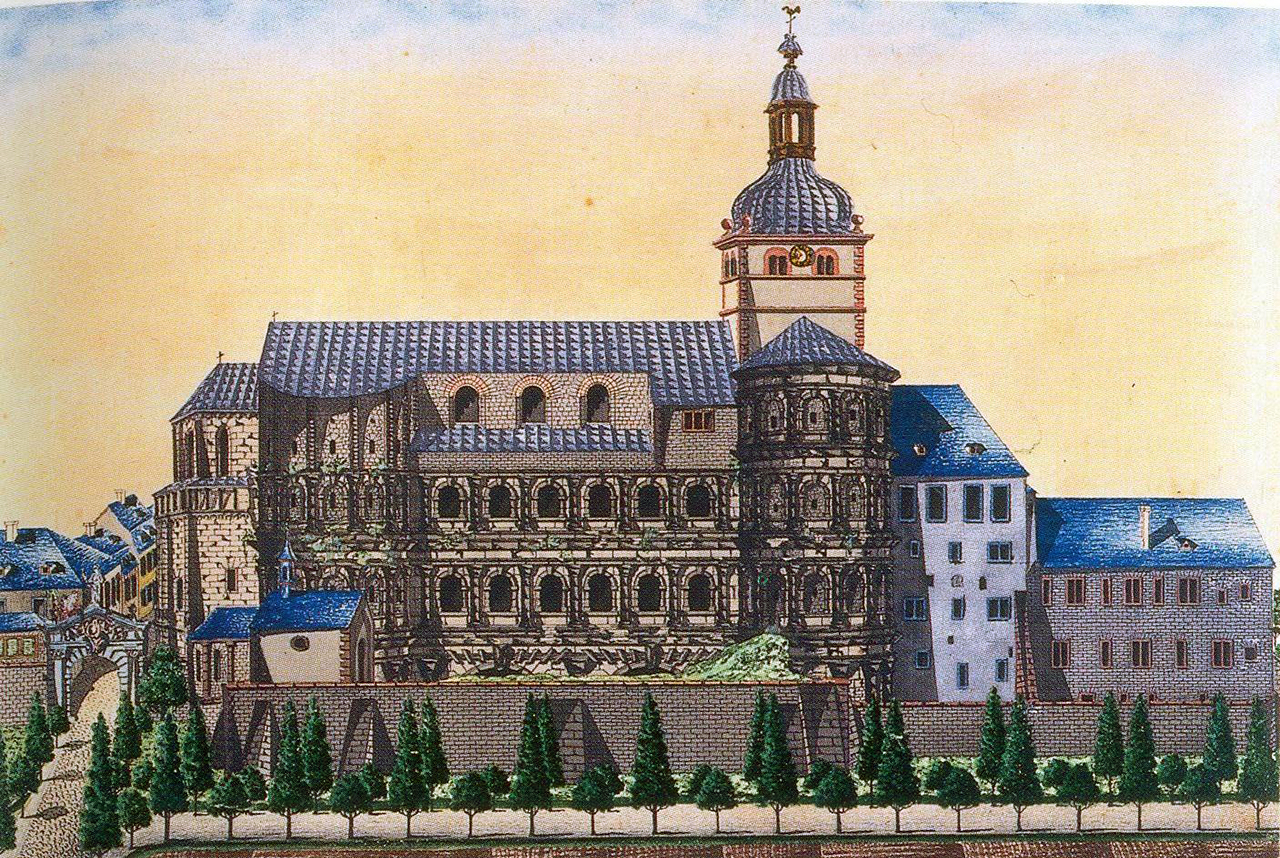
Porta Nigra.Trier, 1793. Lothary.
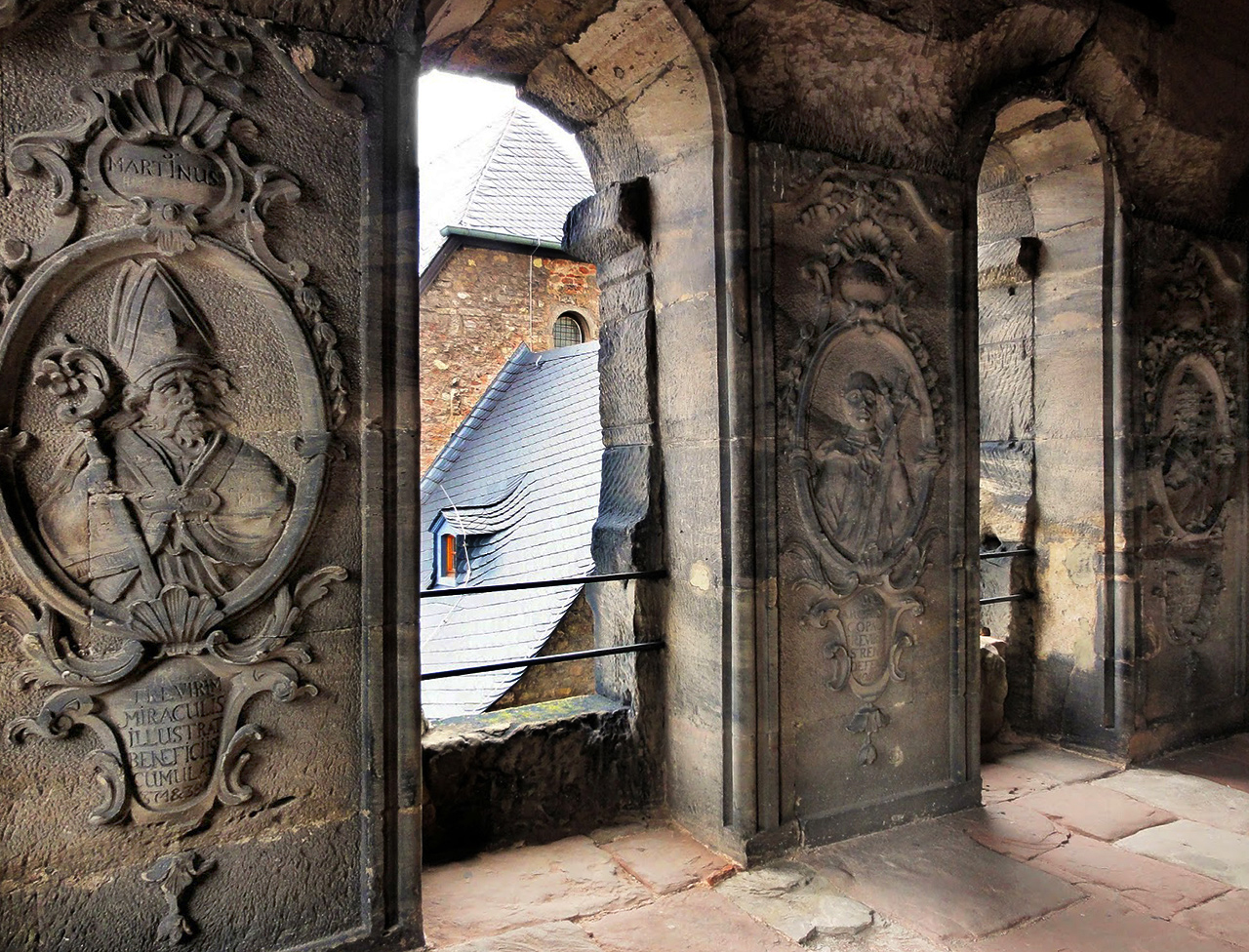
Внутри Порта Нигра не менее впечатляюще.
Когда-то стена простиралась на 6,5 км, но до наших времен дожили только эти северные ворота.
Трирский собор Святого Петра (Dom) уверенно стоит на фундаменте эпохи римского императора Константина и еще тысячу лет простоит.
Вот уже более полутора тысяч лет в нём продолжается богослужение.

Собор в Трире несколько напоминает неприступную крепость.
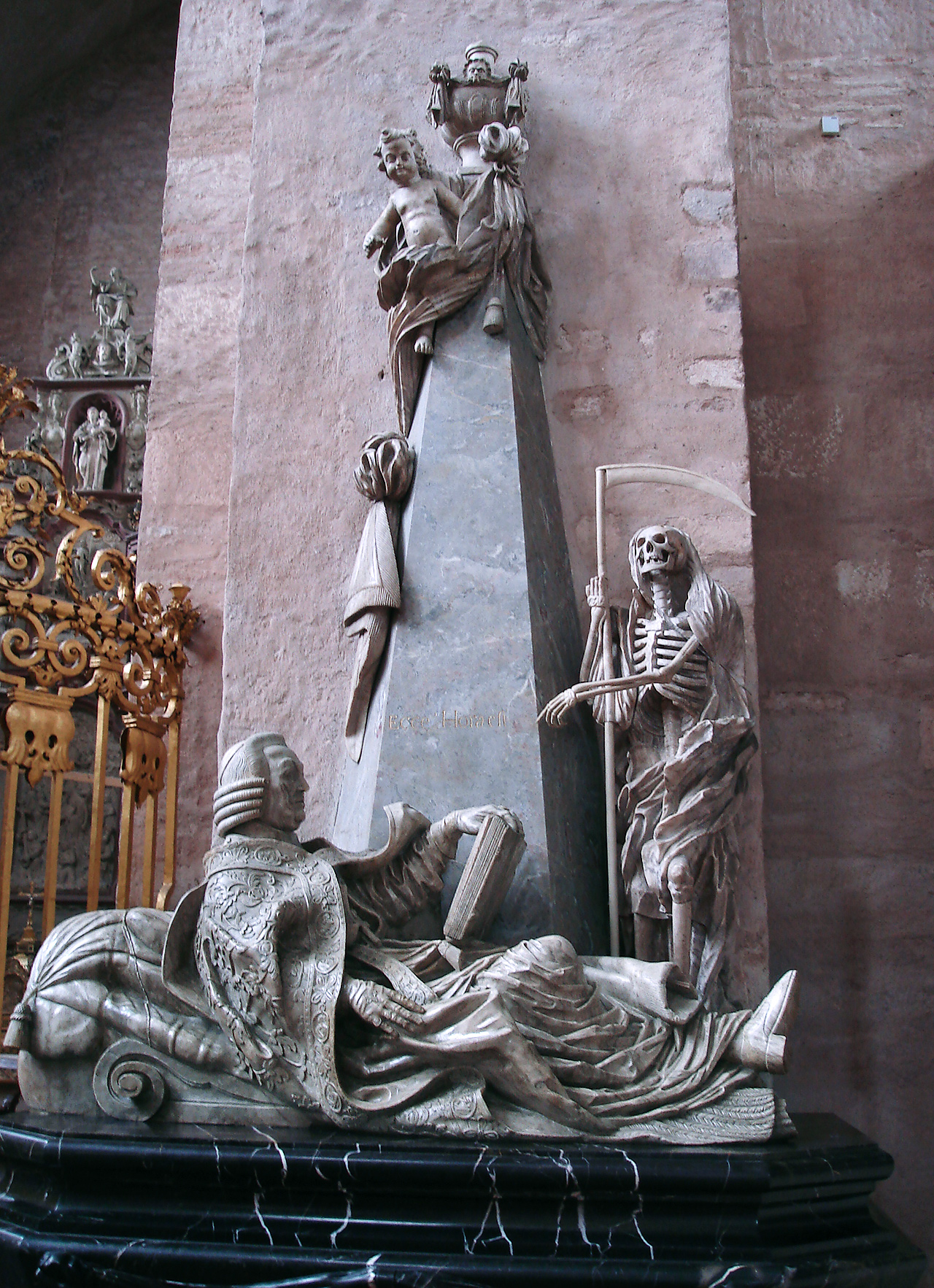
Один из саркофагов в Трирском соборе Св. Петра.
Собор особенный хотя бы тем, что был заложен по распоряжению императора Константина одновременно с собором Святого Петра в Риме и церковью Рождества Христова в Вифлееме. Рядом одна из самых старых готических церквей Германии — церковь Богоматери (XIII век).
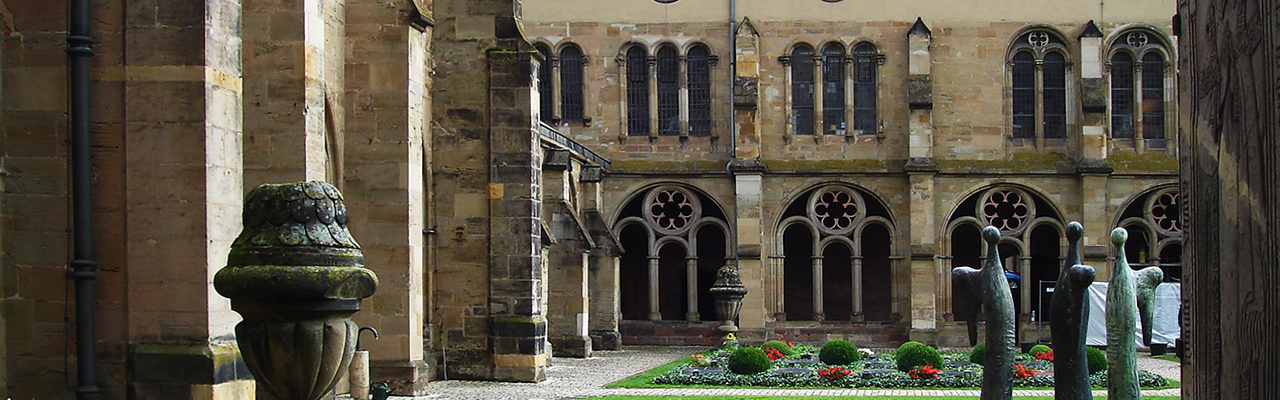
Внутренний дворик. Красиво и умиротворенно, люди, что обрели здесь последний приют, точно покоятся в мире.
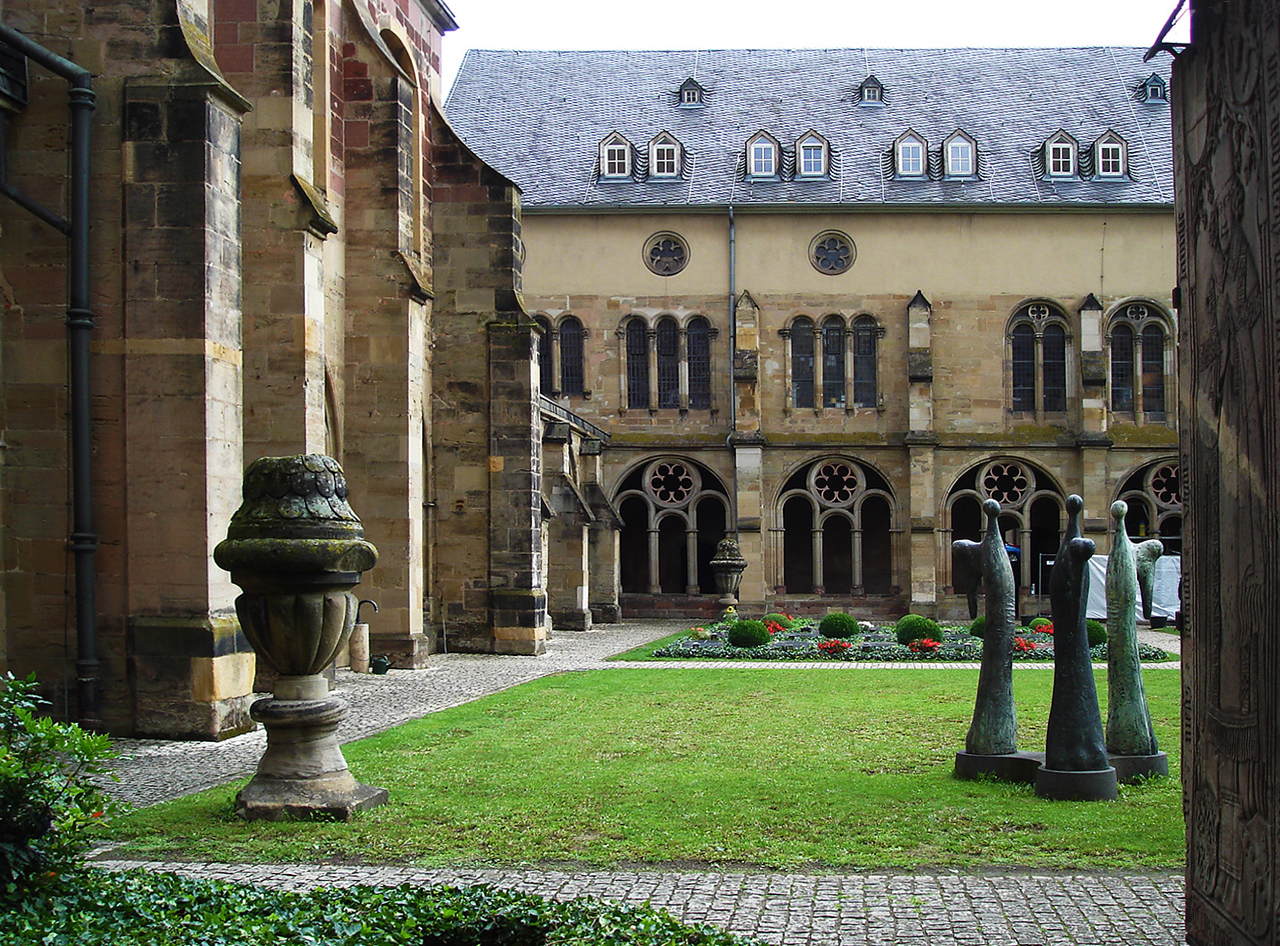
Во дворике Трирского собора Святого Петра.
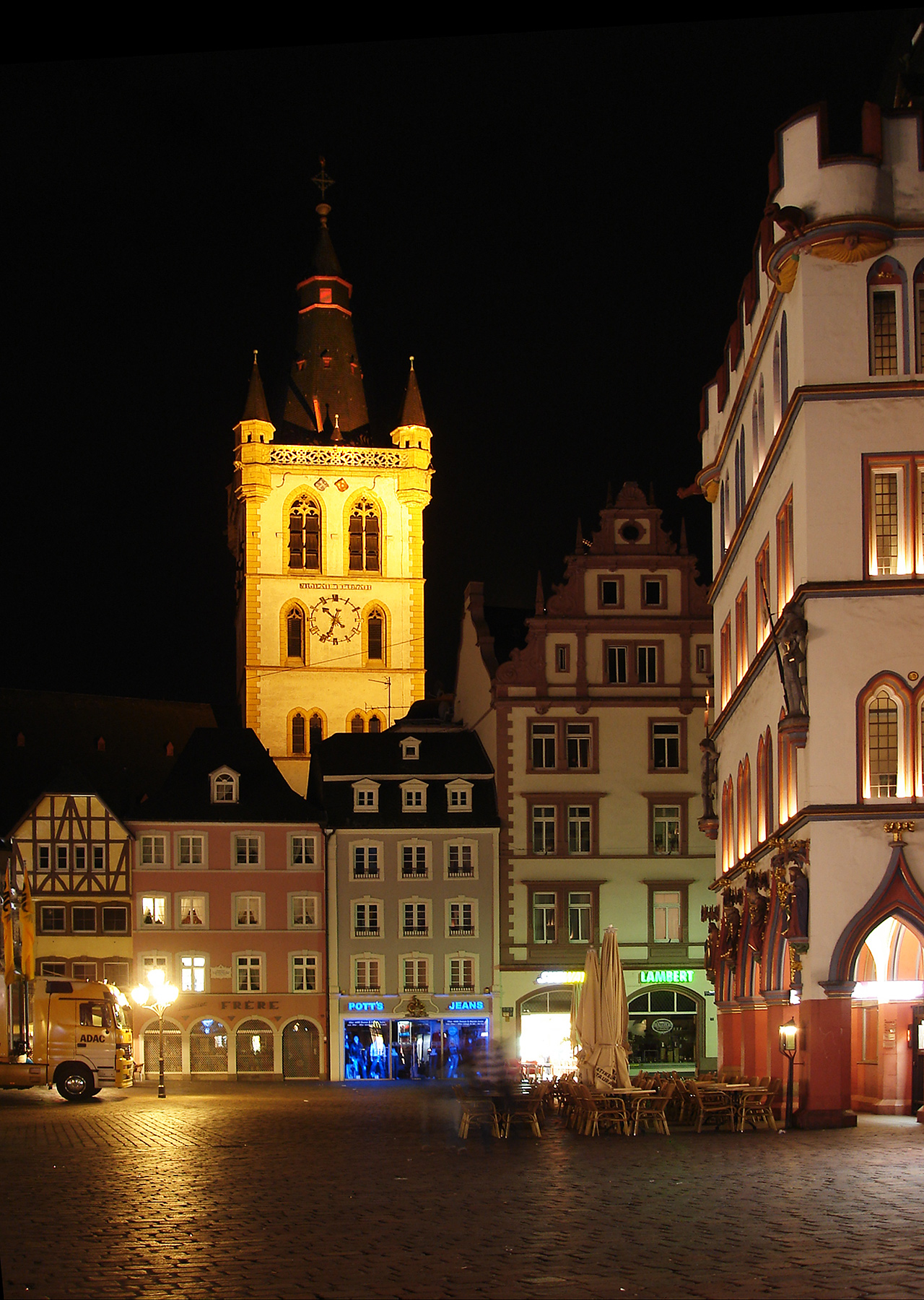
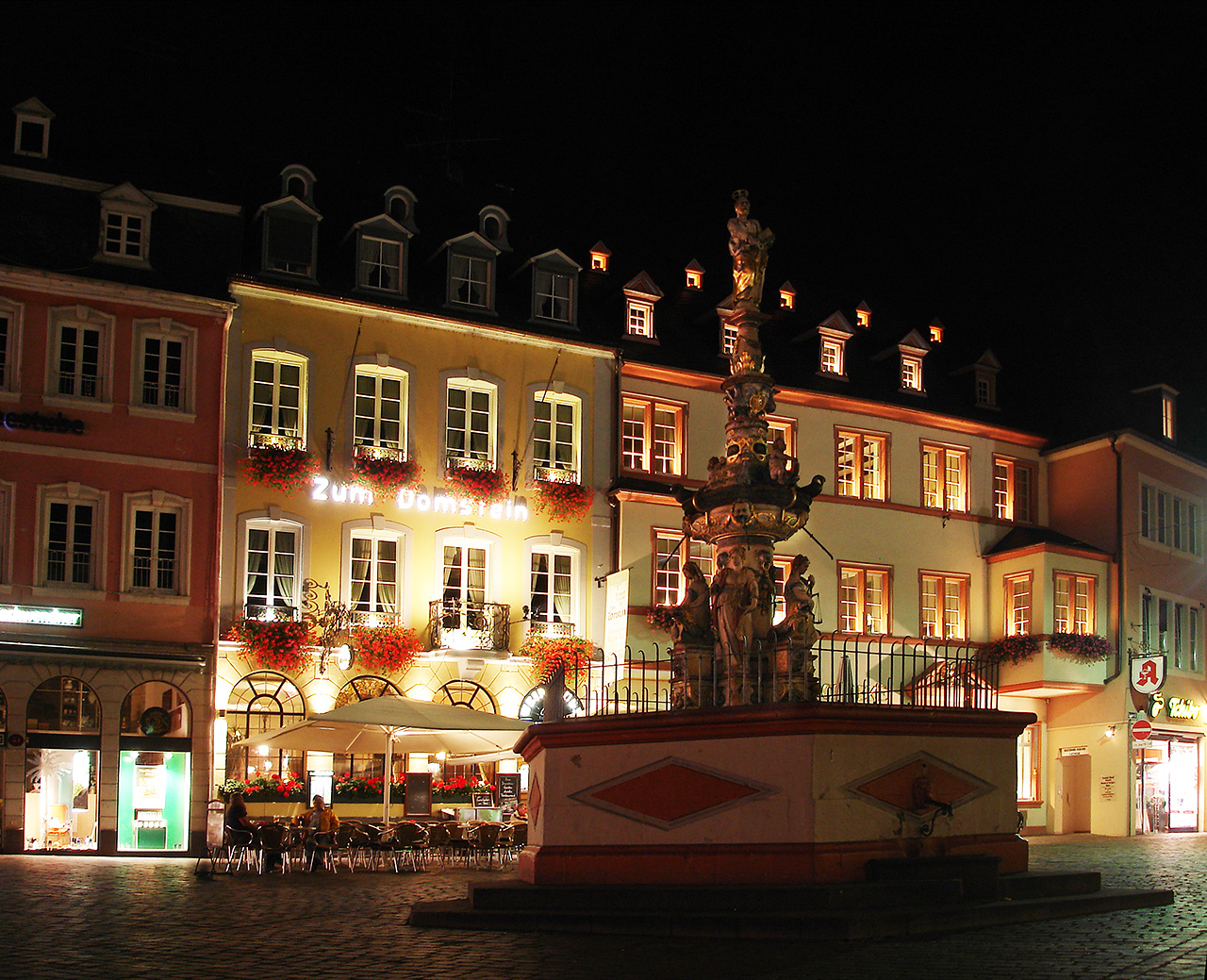
Вечерний Трир.
Ночной Трир — это совсем другое…. Почти безлюден, приятно подсвечен, приглашает, но рассвет наступает всегда, и при любом освещении Порта Нигра хороша.
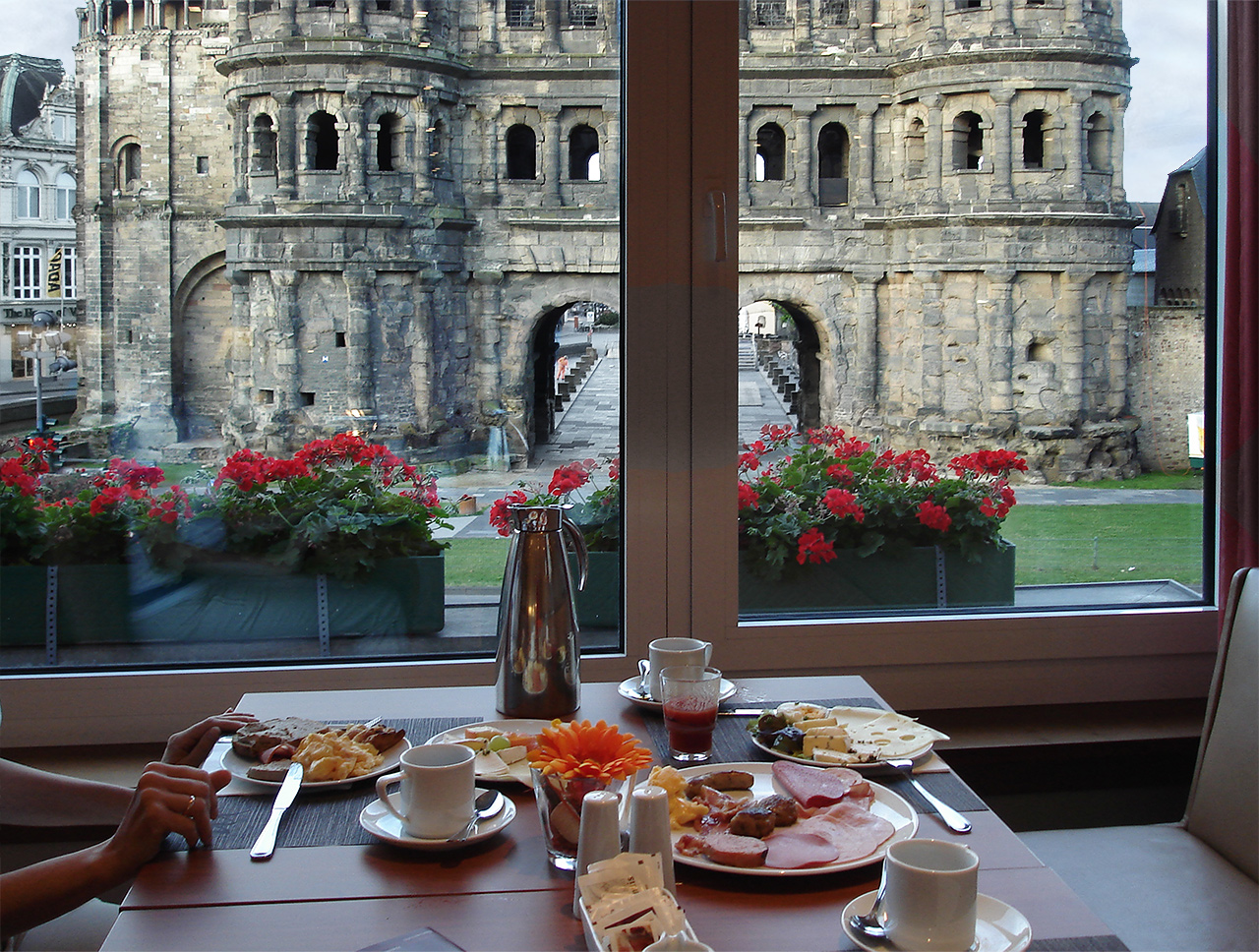
Завтрак с видом на Порта Нигра. Трир. Германия.
«Трир стоял раньше Рима тысячу триста лет, так пусть он стоит и дальше, радуясь вечному миру! Аминь!» — гласит надпись на одном из старинных домов города. Дождётся он и вас.
Всем счастливых дорог!